Claims data, ready for AI. Read, connected, and sourced.
Claims arrive as email threads, faxes, scans, calls, and long attachments. Isomer™ Graph reads all of it as it arrives and builds one connected record of every claim in your book, with every fact traced to its page, for your agents, applications, and analysts. It can run entirely in your own Azure tenant.
Ingest
Email, calls, documents, and faxes, read on arrival
EmailFrom J. Ortiz, Esq.
Our firm represents Dana Lee.
Call transcriptAdjuster, 4 min
“Her supervisor, R. Hale, deleted the texts.”
PDF · 11 pagesDemand letter, p. 9
Limits paid within 30 days.
Scanned faxPolicy declarations
Named insured: Acme Logistics.
Extract
Every fact typed, with its role and its source
Connect
The claim graph: who relates to whom, and how
Trace
Every fact keeps the page it came from
Demand letterp. 9 · attachment 3 of 4
Our client will accept the policy limits if paid within 30 days of this letter.
Structured and in context, not just extracted.
Isomer Graph is an agentic pipeline, LLMs working with tools, built on production claims since early 2025. It doesn’t just pull fields from documents. It structures every message and puts it in the context of its claim and your book.
Every channel
Claims and adjuster inboxes, fax, call transcripts, portals, and APIs, all read-only. A claim’s facts keep arriving long after first notice.
Every file, every page
Threads are split into documents, and scans, handwriting, and photos are read page by page. Deciding facts have turned up on page 149.
Fields by document type
Each document is classified by ACORD document type and extracted into that type’s fields. Uncertain values are marked, not guessed.
The right claim and party
A message with no claim number still finds its claim, and “Acme LLC” and “Acme” become one organization. Ambiguous matches go to review.
The right tool for each step
Each step uses the models and tools that perform best for the cost, and a hard file escalates to a stronger OCR or LLM.
Current from the first message
Each message is resolved against the whole graph as it arrives, and history loads the same way.
What’s on the graph.
Who is who, how they connect, and where every fact came from.
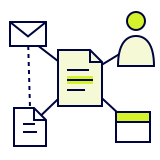
Relationships
Claimant, insured, plaintiff counsel, defense counsel, providers, and adjusters, recognized by role, and linked to the addresses, policies, and events that belong to them.
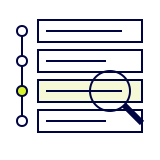
Provenance
Every fact on the graph keeps its source: the communication, the document, the sentence, and the page. That’s what every answer cites.
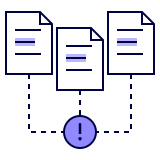
Across claims
Because the graph spans your book, a party or provider on one claim connects to the others they appear on, across lines.
Structure first, so smaller models do more.
Because the reading is done once, as each message arrives, a question reads compact, sourced facts instead of the file. Models are interchangeable: most of the accuracy comes from the pipeline around them, so they can be swapped as better or cheaper ones arrive. In tests on a carrier’s real claims:
6 of 7
claims tasks where the smallest model tested, working from the graph, matched or beat the largest reading raw documents.
8 of 8
court deadlines found on the graph by the smallest model, against 7 of 8 for the largest reading raw files.
18×
less text per question than reading the raw documents, so each question costs a fraction as much.
In your private Azure environment, or a single tenant in ours.
Claims files hold health, financial, and litigation records. Isomer Graph runs single-tenant either way, in your own Azure subscription or in Isomer’s.
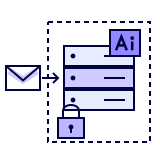
Sovereign, in your tenant
Installed from the Azure Marketplace as a managed application. The pipeline, the originals, the database, and the models all run in your subscription, with customer-managed keys and optional private ingress. Isomer’s access is scoped and logged.

Dedicated, in Isomer’s Azure
A single-tenant environment run by Isomer, with dedicated processing and storage, and no data commingled with any other customer. Private connectivity and private models are available.
What “explainable” means here.
Regulators, auditors, and model-risk teams ask how an AI answer was reached. On the graph, the answer is concrete.
- Every fact keeps its source: the message, the document, and the page.
- Every answer built on the graph can cite the sentence and page behind it.
- Nothing is merged silently. Matched parties are linked, not overwritten, and every exclusion is logged with the rule behind it.
- Uncertain values are marked, and ambiguous claim matches go to review.
- Every model call is logged and replayable, for regulators, exams, and discovery.
- Aligned with the NAIC Model Bulletin on AI Systems and the NIST AI RMF.
Be the layer, not another silo.
Isomer Graph is headless. It sits alongside your claim system and reads from it, it doesn’t write to your systems, and it isn’t another app adjusters log into. The graph lives in one PostgreSQL database, with the originals in blob storage.
API
Query claims, parties, and documents, and subscribe to change events: a claim created, a message attached, a deadline placed.
MCP
Give your own AI agents scoped, sourced claims context, in the tools your teams already use.
CLI
Script and test against the same access layer Isomer’s own applications use.
Ask your claims in plain English.
One application built on the graph: ask questions across claims and get answers with the source attached, in the Isomer app or in the AI tools your teams already use.
Four claims, nearest first:
- Dana LeeTime-limited demandNov 14Demand letter, p. 9
- M. OkaforAnswer to complaintNov 18Summons, p. 2
- Brightline FoodsAppraisal responseNov 21Appraisal demand, p. 1
- T. NguyenBoard hearingNov 24Hearing notice, p. 1
Answered from the claim graph, with the source of each fact
Yes, on three earlier claims:
- Claim A-101Commercial auto2024Settled
- Claim A-102General liability2025Suit filed
- Claim A-103General liability2025Settled
Answered from the claim graph, with the source of each fact
Two new messages:
- Oct 15Demand letter, 11 pagesPolicy limits, due Nov 14p. 9
- Oct 9Adjuster callSupervisor deleted the textsTranscript
Answered from the claim graph, with the source of each fact
Questions claims teams ask
- Which claims mention a surgery recommendation this month?
- Show every claim at the Dayton warehouse.
- Which demands are above policy limits?
- Who else has this provider treated on our book?
- What does the insured’s policy say about additional insureds?
What teams build on the graph.
A claims assistant is one use. These are others that claims, data, and technology teams run on it.
Custom AI agents
Your agents, connected through MCP, read a claim’s full context, parties, and history before drafting a summary, a letter, or a recommendation for a person to review.
Litigation management
A plaintiff firm’s history on your book, its venues, and outcomes; every claim where suit was served; demands and their response dates across open claims.
Patterns across claims
The same provider and attorney on unrelated claims, clusters of losses at one location, or every claim tied to a catastrophe.
Recovery research
Responsible parties, contractors, and other carriers named in the documents, linked to every claim where they appear.
Underwriting feedback
A policyholder’s loss history at renewal, across policies, perils, and locations, drawn from the correspondence, not only coded losses.
Claim-system data quality
Fields your claim system is missing or got wrong, found in the documents and offered back for a person to confirm.
Analytics and reporting
Sourced claim facts for actuarial, BI, and operations analysis, including facts that never reached the claim system.
Regulatory and audit response
What was received, when, what it said, and who it went to, reconstructed for an exam, a complaint, or discovery.
Book transitions
A TPA change, an acquisition, or a system migration: load the archive, and the history arrives connected and searchable.
Walk through a claim graph.
Thirty minutes with our engineers in a graph built from synthetic claims: how each message becomes claims, parties, and sourced facts, and how your agents and applications would query it.