Everyone's Talking About Jev. Here's What Actually Worked for Us.
Decision models promised instant, cheap document classification. We tested them against real claims documents. Here's what held up, and what actually worked.
Read the post
Every claim has a clock running before it's entered into the claims system. From the moment a demand letter, medical bill or attorney email lands, its value to the carrier starts to decay, and that decay is measured in dollars.
Every claim has a clock running before it’s entered into the claims system. A demand letter arrives with a deadline. A medical bill arrives with charges that will move the reserve. An attorney’s email changes the posture of the file. From the moment each one lands, its value to the carrier starts to decay, and that decay is measured in dollars.
At ITC Vegas, MSIG USA’s Prashant Hinge, Chief Information and Transformation Officer, joined Isomer™ CEO Sean Chou and Datos Insights’ Meredith Barnes-Cook for Point of Receipt: Redefining Claims Risk Detection. His point: in the whole claims lifecycle, the most expensive variable is time.
Time has no line on the claims P&L, but it’s the cost behind every other one.
Many of the most important risk signals on a claim, such as time-limited demands, letters of representation and medical bills, land in the inbox before they reach the claim system. There they wait in a queue until someone opens them and keys them in through the intake process.
Skilled adjusters act as data routers. Every incoming communication has to be opened, read, matched to a claim and triaged before anyone can make a judgment on it. In most claims organizations, adjusters do that work, which spends the team’s most specialized expertise on some of its most routine tasks. So the speed of risk recognition depends on how much capacity each adjuster has.
Claim system analytics operate downstream. Severity models, fraud scoring and litigation analytics all run on data already in the claim system. A risk sitting in an unread attachment is invisible to every one of them. The analytics start when intake finishes, and intake runs on human time.
Deadlines turn delay into indemnity. Time-limited demands carry their own clock, and each state sets its own rules for how long a carrier has to respond. Miss a policy-limits demand and the exposure can move past the limits. A 30-day demand that waits a week in the queue has lost nearly a quarter of its window before anyone evaluates it. Reserve lag works the same way, more quietly. When the facts that should move a reserve sit unread, the reserve trails the exposure, and the gap surfaces later as adverse development.
The claim system’s clock starts at entry, so the first interval is the one the system cannot see.
Receipt to recognition. How long from the moment a communication lands until someone knows what it contains? Measure it in hours, by communication type, and separately for catastrophe weeks.
Recognition to escalation. How long until a time-limited demand, a letter of representation or a reserve-moving bill reaches the person with authority to act?
Escalation to action. How long until the notice goes out, the reserve moves or the bill is disputed?
That raises a strategic question for claims leaders: if technology could handle the sorting, prioritization and signaling consistently on every communication, how much more could adjusters accomplish if they started each day already briefed by it?
When a communication is read the day it arrives, the adjuster has more of the claim’s life left to act on it. Notices go out inside the window. Reserves reflect what’s in the file. Problems get handled while they’re still inexpensive to resolve.
Isomer is a core-system-agnostic system of action that works at the point of receipt, before a communication reaches the claim system. It reads every claim communication on arrival, and Isomer Signals™ flags the ones that carry risk, such as a letter of representation, a time-limited demand, or a bill that doesn’t add up. Each finding is written to the claim file, cited to its source, inside the workflow the team already uses. Adjusters review each finding and make the call.
Isomer is live with carriers, TPAs and MGAs, and can be deployed two ways:
Every claim pays for time, and the clock starts at the point of receipt.
The signal is in the inbox.
Get new posts by email.
New posts on claims risk and AI in claims. Unsubscribe any time.

Decision models promised instant, cheap document classification. We tested them against real claims documents. Here's what held up, and what actually worked.
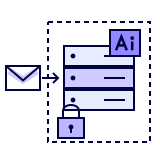
Core-system agnostic deployment runs inside the insurer's own Azure tenant, so claim data never has to leave the environment the insurer already governs.